Game theory
- Adam Worcester

- Mar 11
- 3 min read
Reading lessons don't have to be boring

I’ve been watching sample reading lessons on You Tube from different science of reading programs. All follow Orton-Gillingham principles. All are well-grounded in research. The lessons are explicit, sequential, cumulative, multisensory….and dry as the Sarah desert.
There is no science against livening them up.
A typical tutor session, in any program, might include review, drill, introduction of a new concept, then practice with that concept– which includes reading, spelling, and writing.
In many videos a tutor will explicitly introduce something, say a sound (“ir says /er/”). Then the student will air write the letters, read a list of ir words, then short ir phrases, and then sentences. Next the tutor will dictate ir words, phrases, or sentences for the student to write. Then they will move to the next phase of the session.
This is fine and well, but why not game it instead?
Games are not built into the formal, step-by-step structure of most tutoring programs. Many tutors see them as a waste of time or a special reward. But structuring activities in game form lends several advantages.
First, it’s more productive. Kids who protest reading 20 words from a list will read double that amount trying to win a game. You get their best effort.
Second, it’s more instructive. Without the pressure of a test or drill, students read and write more instinctively. It can give a clearer snapshot into strengths and weaknesses.
Third, it’s more versatile. The same game can be used for reading, spelling, and proofreading; or for introducing new concepts while simultaneously reviewing old ones.
Finally, it’s more fun. If mom or dad is watching the session they can play too. And you can lend games to take home for more practice.
The catch is time -- both to find or make games and to play them. Some games might prove too long to finish in session (one strategy is to set a time limit). But there are lots more that take just 5-15 minutes and can be slipped into a time slot allotted for practice or review.
Some of the most effective games are easy to make. Others can be ordered online or bought in stores.
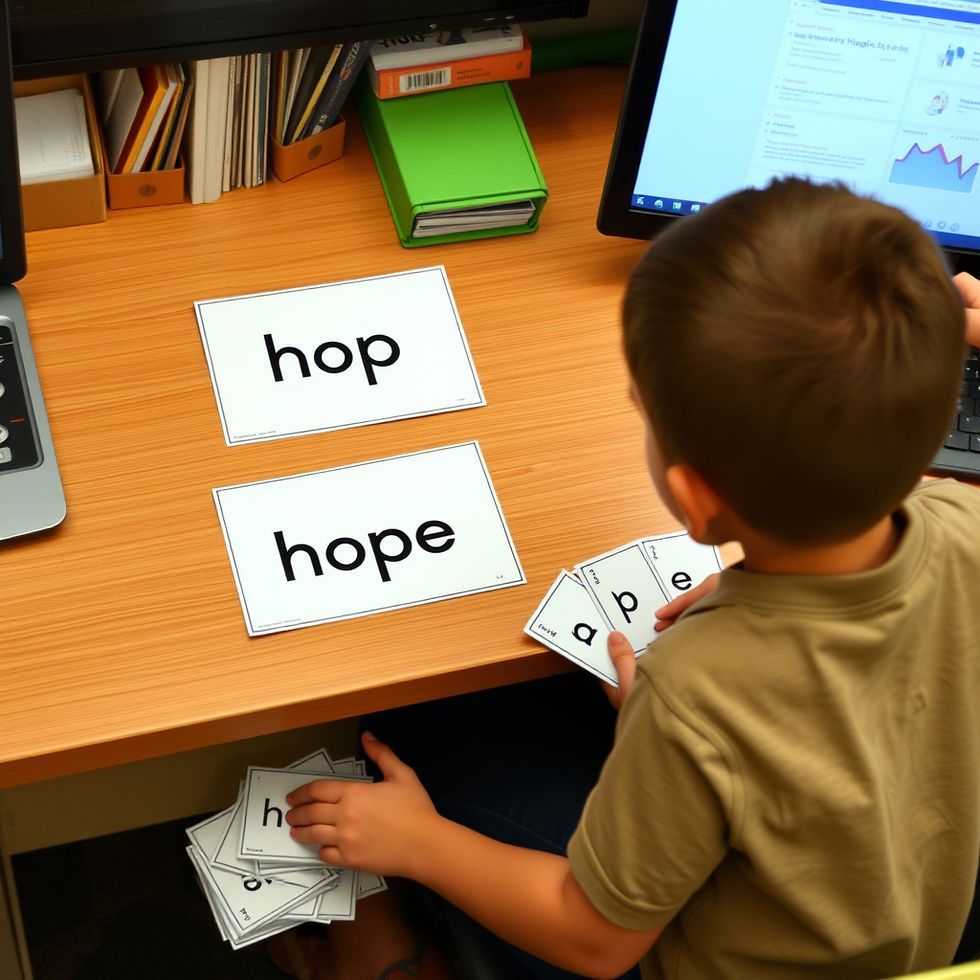
Memory is one of the simplest and best. Suppose you want to practice short vowels vs. final e. Make a set of 15 pairs of index cards such as not-note, pin-pine, cut-cute, etc., then lay them out face down. Ensure students read each word as they turn them over.
Hangman is another classic. It forces students to hold letters in their memory and use their knowledge of letter patterns. So does Wordle.
There are so many good options.
If you’re more of do-it-yourselfer, Peggy Kaye has three books – Games For Reading, Games For Spelling, and Games For Math – filled with great suggestions. The book Words Their Way has a supplemental segment with games, board templates, and instructions.
If you prefer your games ready to play, check out Moose Materials from Blue Moose Literacy (bluemooseliteracy.com/moose-materials). It has an impressive selection of board and card games that complement any science of reading-based program.
One great feature of reading board games is that they can be used for both reading and writing practice. For instance, players might have to read a short phrase to roll the dice and advance around the board. The next round you can switch the tables: now players have to write a short phrase dictated by the other player.
In addition to reading and writing their own words and phrases, students need to check the tutor’s (and parents’) work for mistakes. Be sure to make a few. Proofreading is often the most challenging aspect – and the best way to stretch the brain.
Of course not all students like to play games. Some are too immature; some shun competition; some prefer standard exercises.
But most students, I think, like to play. For some it is their best method of learning. Others see it as a break from “real work.” And all kids like to beat tutors and parents.
Whether regularly or occasionally, integrating games into sessions is not only a fun change of pace but also an effective tool for increasing productivity and monitoring progress in a low-stress environment.
At least that’s my theory. Anyone else want to weigh in?

Comments